
Blockchain Development
Blockchain Development
Services for
Real Business Applications
Build the platform around your business—not around blockchain hype.
MTI Tech helps businesses plan and develop blockchain-enabled applications with clear user journeys, connected backend systems, defined permissions, and a practical implementation roadmap.

Business first
What are blockchain development services?
Blockchain development services cover the planning, design, implementation, integration, and testing of applications that use a blockchain. MTI Tech's approach connects the blockchain component with the interfaces, databases, permissions, operational processes, and reporting needed to make the wider product usable.
Whether you are exploring asset tokenization, shared transaction records, or blockchain integration with an existing platform, we start with the business process. We identify what needs to be recorded, who can take action, which information belongs on-chain, and what should remain in your application.
Built around your use case
What we can help you build
Blockchain feasibility and architecture
Before development begins, we assess the purpose of the proposed blockchain component.
We help define the participants, records, permissions, transaction rules, integration requirements, and operating responsibilities. Where an ordinary database provides a better fit, that should be identified before unnecessary complexity is introduced.
Asset-tokenization platform foundations
We help translate a tokenization concept into a structured application plan covering asset information, participant journeys, document handling, administrative review, and transaction records.
For real-estate projects, the software scope must remain separate from the legal arrangements defining participation and ownership rights. Legal and compliance decisions need appropriately qualified review before a platform accepts investment activity.
Smart-contract workflows and application integration
Where the selected architecture requires smart contracts, the engagement can cover defined contract behaviour, application connections, transaction states, and test-environment validation.
The scope should explain what the contract controls, who holds administrative permissions, how failures are handled, and what must be reviewed before production deployment.
Wallet and transaction experiences
A blockchain-connected product needs understandable interfaces around connection, authorization, pending transactions, failures, and confirmation.
We plan these experiences alongside the application's account model and support process, rather than treating wallet connection as the entire product.
Administrative systems and operational controls
We help design the application tools required to review records, manage permissions, inspect activity, handle exceptions, and maintain an accountable operating process.
Testing and release preparation
Testing should cover both the application and its blockchain interactions. Development testing is not a substitute for an independent security assessment where one is required; even an audit is not a guarantee that every vulnerability has been found.
A clear path to implementation
Our blockchain development process
- 01
Discover the use case.
Define the business problem, users, records, and reason for using blockchain.
- 02
Design the architecture.
Establish on-chain and off-chain responsibilities, integrations, permissions, and dependencies.
- 03
Build a bounded prototype.
Test one important journey before committing to the full platform.
- 04
Implement and review.
Develop the agreed application components and test the relevant transaction and failure paths.
- 05
Prepare for release.
Confirm technical readiness, operational ownership, required external reviews, monitoring, and support arrangements.
Development case study: MTIBITZ
MTIBITZ: Developing a Real-Estate Marketplace Foundation
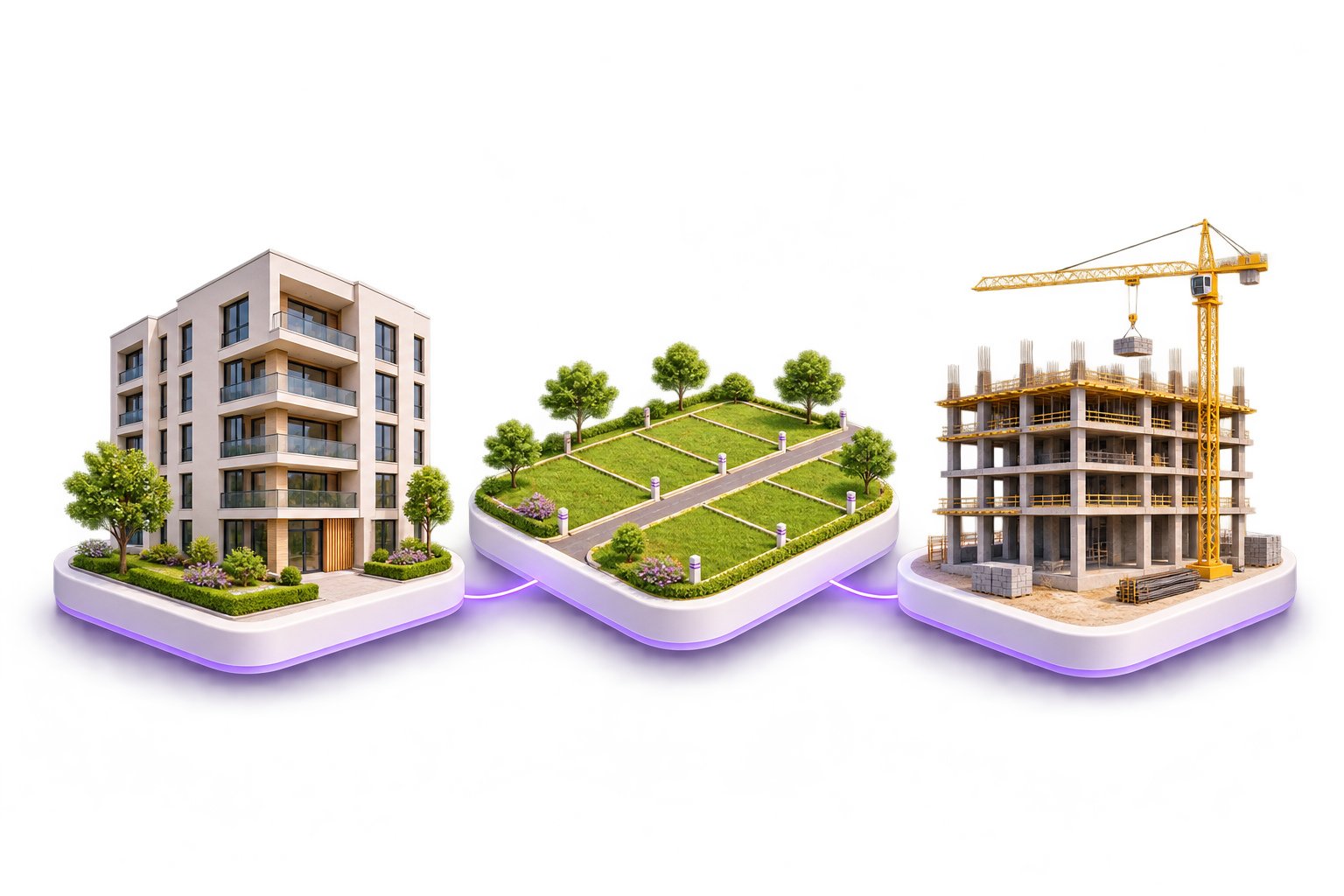
MTIBITZ is a real-asset marketplace project beginning with real estate. Its planned property categories include completed rental properties, plots and land, and under-construction projects.
The challenge
The project needed to explain a complex marketplace concept in language ordinary users could understand while keeping planned functionality separate from features available for actual use.
The platform experience also needed a clear structure for property information, educational content, participation journeys, and development-status communication.
MTI Tech's approach
The work has focused on developing the product foundation: the brand experience, marketplace structure, page journeys, educational explanations, and a staged application roadmap.
A central requirement is to distinguish a planned feature, a demonstration, a limited release, and a production service. That distinction is explicitly reflected in the project's status materials.
What this example demonstrates
MTIBITZ demonstrates how a tokenization-related concept can be organized into a clearer product and development plan.
Those capabilities must not be advertised as completed merely because interfaces or platform components have been developed.
It does not currently demonstrate live token issuance, investment settlement, or production token transfers.
Questions, answered
Blockchain development FAQs
Does every business application need blockchain?
No. We first examine the record-keeping, trust, and coordination requirements. A conventional application may be the better solution.
Can MTI Tech help with a real-estate tokenization platform?
Yes. We can scope the application architecture, property-information workflows, interfaces, integrations, and development roadmap. The project must separately resolve its legal and operating requirements.
Can blockchain connect to an existing website or app?
Integration can be included in the scope after reviewing the existing system, available APIs, account model, and transaction requirements.
Do you guarantee a completely secure blockchain application?
No. Security requires defined controls, testing, review, monitoring, and maintenance. No responsible development proposal should promise zero risk.
What determines the project cost?
The use case, application scope, contract requirements, integrations, security-review needs, and ongoing operating model.

Let's define your next step
Turn your blockchain idea into a clearly scoped product.
Tell us what the application needs to do, who will use it, and which records or transactions it must manage. We will help define a practical starting point.