Core Web Vitals Decoded: Why Speed is Now a Revenue Metric
Introduction
In today’s digital-first economy, website speed is no longer just a technical SEO checkbox, it’s a direct business driver. Users expect pages to load instantly, interactions to feel smooth, and layouts to remain stable from the first click to conversion. Google recognized this shift in user behavior and formalized it through Core Web Vitals, a set of performance metrics that now play a critical role in rankings, user experience, and ultimately, revenue.
For businesses investing in SEO Optimization Services, understanding Core Web Vitals is no longer optional. Faster websites retain users, reduce bounce rates, increase engagement, and convert better. This article breaks down Google’s key speed metrics, Largest Contentful Paint (LCP), First Input Delay (FID), and Cumulative Layout Shift (CLS) in plain English and explains why speed has become a measurable revenue metric.
What Are Core Web Vitals?
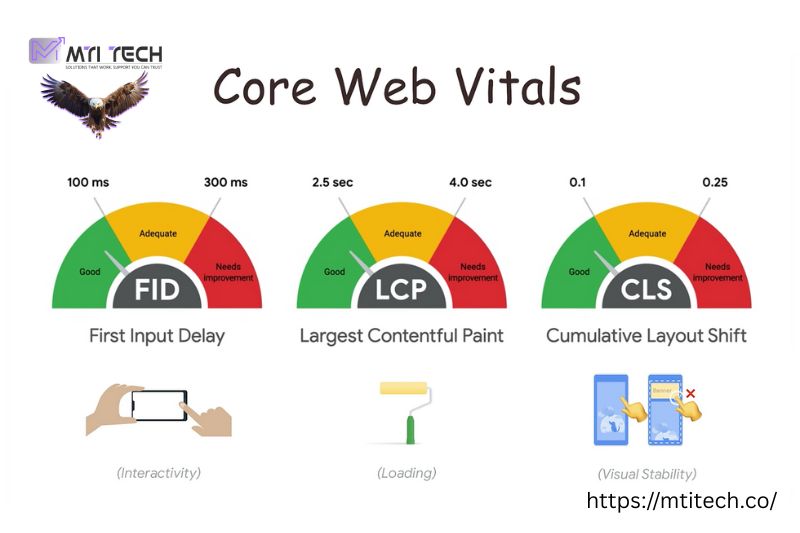
Core Web Vitals are a subset of Google’s Page Experience signals designed to quantify real-world user experience. Unlike traditional performance metrics that focus on lab-based speed tests, Core Web Vitals are based on actual user interactions collected through Chrome User Experience (CrUX) data.
These metrics answer three fundamental questions:
- How fast does the main content load?
- How quickly can a user interact with the page?
- Does the page remain visually stable while loading?
By standardizing these measurements, Google aims to reward websites that prioritize real user satisfaction, not just technical optimization tricks.
Largest Contentful Paint (LCP): How Fast Users See Value
Largest Contentful Paint (LCP) measures how long it takes for the largest visible element on a page, usually a hero image, banner, or main text block to fully load.
Why LCP Matters
From a user’s perspective, LCP represents the moment when a page feels “useful.” If this moment is delayed, users assume the site is slow, even if other elements are loading in the background.
Google’s benchmarks:
- Good: Under 2.5 seconds
- Needs Improvement: 2.5–4 seconds
- Poor: Over 4 seconds
LCP and Bounce Rate
Multiple studies show that when LCP exceeds 3 seconds, bounce rates increase sharply. Users don’t wait for slow pages, they abandon them. For eCommerce and service-based websites, this directly impacts lead generation and sales.
Optimizing LCP is a core focus of professional SEO Optimization Services, as it involves server performance, image optimization, caching strategies, and clean code delivery.
First Input Delay (FID): The Cost of Laggy Interactions
First Input Delay (FID) measures the time between a user’s first interaction (click, tap, or key press) and the browser’s response.
Understanding FID in Simple Terms
Imagine clicking a button and nothing happens for a moment. That delay, even if it’s just a few milliseconds, creates frustration. FID captures this exact experience.
Google’s benchmarks:
- Good: Under 100 milliseconds
- Needs Improvement: 100–300 milliseconds
- Poor: Over 300 milliseconds
Why FID Impacts Conversions
Even visually fast websites can feel slow if JavaScript blocks user interactions. High FID often results from heavy scripts, excessive third-party tools, or unoptimized frameworks that keep the browser’s main thread busy. When users click a button, try to scroll, or attempt to submit a form and nothing happens immediately, frustration sets in almost instantly.
From a revenue standpoint, delayed interactions reduce trust and confidence. Users subconsciously associate unresponsive behavior with poor quality or unreliability. As a result, they are less likely to fill out lead forms, add products to carts, or complete checkouts, especially on mobile devices, where patience levels are even lower.
High FID also disrupts user flow during critical moments of the conversion journey. Whether it’s clicking a call-to-action, navigating pricing pages, or interacting with filters, even minor delays can interrupt momentum and increase abandonment rates.
Professional SEO Optimization Services focus on minimizing main-thread work, deferring or removing non-critical JavaScript, optimizing script execution order, and limiting third-party dependencies. By improving overall interactivity, these optimizations ensure that user actions feel instant and reliable, keeping FID within optimal limits and directly supporting higher engagement and conversion rates.
Cumulative Layout Shift (CLS): Stability Builds Trust
Cumulative Layout Shift (CLS) measures how much a page’s layout unexpectedly moves during loading.
What Causes Layout Shifts?
Common causes include:
- Images without defined dimensions
- Ads or embeds loading late
- Fonts swapping after initial render
Google’s benchmark:
- Good: Less than 0.1
CLS and User Experience
Layout shifts are more than an annoyance, they cause misclicks, frustration, and lost conversions. Imagine trying to click a button, only for it to move at the last second. That single moment can cost a sale.
A stable layout signals professionalism and reliability. That’s why CLS optimization is a critical
part of modern SEO Optimization Services.
Why Speed Is Now a Revenue Metric
Website speed directly affects user behavior, and user behavior directly affects revenue. The connection is no longer theoretical, it’s measurable.
Speed vs Bounce RateAs page load time increases, bounce rates rise. Users who leave immediately never see your value proposition, offers, or CTAs.
Speed vs Engagement
Fast-loading pages encourage deeper browsing, longer sessions, and higher content consumption. This improves brand recall and trust.
Speed vs Conversions
Even a one-second delay can reduce conversions significantly. For service-based businesses, that means fewer inquiries. For eCommerce, it means abandoned carts.
Because Core Web Vitals influence rankings, speed also affects organic visibility, making it a double-impact metric, traffic plus conversion performance.
Core Web Vitals and SEO Optimization Services
Modern SEO is no longer just about keywords and backlinks. Technical performance plays an equally important role.
Professional SEO Optimization Services integrate Core Web Vitals optimization through a structured, data-driven approach that goes far beyond basic speed tweaks. This process typically begins with:- Auditing real-user performance data, using tools like Google Search Console and Chrome User Experience reports to understand how actual visitors experience the site across different devices and network conditions. Unlike lab tests, this data reveals real bottlenecks that impact rankings and user behavior.
- Another critical step is improving server response times. A slow server can delay everything else on the page, negatively affecting LCP and overall load performance. SEO professionals optimize hosting environments, configure caching layers, reduce Time to First Byte (TTFB), and implement CDN solutions to ensure content is delivered quickly to users regardless of location.
- Optimizing images and media delivery is equally important. Large, uncompressed images are one of the most common causes of poor LCP scores. SEO Optimization Services focus on next-gen image formats, responsive image sizing, lazy loading strategies, and efficient media compression to balance quality with speed.
- To address interactivity issues, experts work on Reducing JavaScript execution. Heavy or poorly managed scripts can block the main thread and increase FID, making pages feel unresponsive. This involves removing unused code, deferring non-critical scripts, minimizing third-party tools, and improving script execution order.
Finally, ensuring layout stability across devices is essential for maintaining a low CLS score. SEO professionals define proper dimensions for images and embeds, manage dynamic content carefully, and test layouts across screen sizes to prevent unexpected shifts. Together, these optimizations ensure that Core Web Vitals improvements translate into better rankings, lower bounce rates, and higher conversions, not just faster load times.
This holistic approach ensures that SEO efforts translate into real business growth, not just higher rankings.
Measuring and Monitoring Core Web Vitals
To maintain strong performance, regular monitoring is essential. Key tools include:
- Google Search Console (Core Web Vitals report)
- PageSpeed Insights
- Chrome User Experience Report
Tracking trends over time helps businesses identify performance regressions and opportunities for improvement.
Future-Proofing Your Website Performance
Google continues to refine its ranking algorithms, but one principle remains constant: user experience wins. Core Web Vitals may evolve over time, with new metrics or thresholds introduced, but the foundation will always revolve around speed, interactivity, and visual stability. Websites that consistently deliver smooth, fast, and reliable experiences are more likely to adapt successfully to future algorithm updates.
Future-proofing performance also means building with scalability in mind. As traffic grows, content expands, or new features are added, performance can easily degrade if the technical foundation is weak. Ongoing optimization ensures that your website remains resilient under increased load, performs well across devices, and meets user expectations even as technology and browsing habits change.
Investing in SEO Optimization Services that prioritize performance is not just about improving today’s rankings, it’s about long-term digital sustainability. A performance-focused SEO strategy helps businesses stay competitive, protect organic visibility, and maintain strong conversion rates, ensuring that website growth aligns with both user satisfaction and revenue goals.
Conclusion
Core Web Vitals have transformed website speed from a technical detail into a measurable revenue metric. By understanding LCP, FID, and CLS in simple terms, businesses can see how performance directly influences bounce rates, engagement, and conversions.
In an era where every second counts, faster websites don’t just rank better, they earn more. Poor performance can cost leads, sales, and even brand credibility, while optimized experiences build trust and cultivate long-term customer relationships.
For brands serious about growth, optimizing Core Web Vitals through expert SEO Optimization Services is no longer optional.