The “Zero-Click” Crisis: What Happens When Your Customers Stop Visiting Websites?
The website visit is no longer guaranteed
For years, businesses treated search engines as a simple pathway
A customer had a question, typed it into Google, saw a list of results, clicked a website, and then decided whether to read, buy, book, call, subscribe, or leave
This was the basic deal between websites and search engines
Businesses created useful content, search engines ranked it, and users clicked through
That deal is now changing
We are entering an era where customers may get complete answers without visiting a single website
Search engines are becoming answer engines
AI tools are summarizing information, comparing options, explaining services, recommending brands, and guiding decisions directly on the search page
Instead of sending users to ten different links, AI can now give one clear response in seconds
This creates a serious challenge for businesses, marketers, SEO teams, and website owners
What happens when people still search for what you offer, but they no longer click your website?
What happens when your content helps answer a question, but the visitor never lands on your page?
What happens when visibility exists, but traffic disappears?
This is the zero-click crisis
Zero-click search is not completely new
Featured snippets, knowledge panels, maps, calculators, weather boxes, and quick answers have existed for years
But AI search has made the situation much bigger
Now, instead of answering small facts, AI can answer complex questions
It can explain a process, compare service providers, summarize product categories, and even help users decide what to do next
For businesses, this means the old SEO mindset is no longer enough
Ranking on page one is still valuable, but it is not the full game anymore
The new challenge is not only to rank
The new challenge is to become the answer that AI systems trust, quote, summarize, and recommend
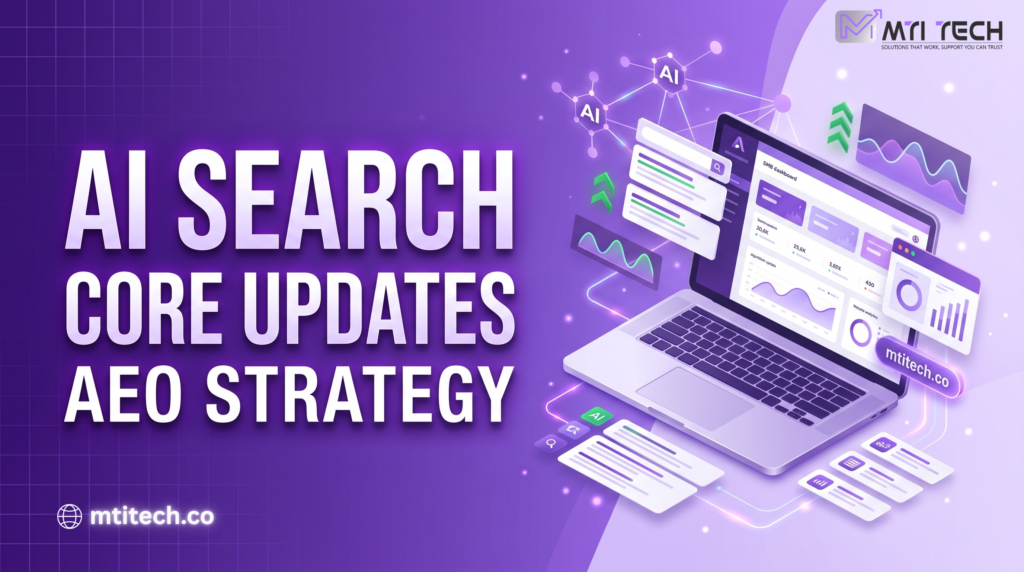
That is where AEO, or Answer Engine Optimization, becomes important
What Is the Zero-Click Crisis
The zero-click crisis happens when users search for information but do not click any website because the answer appears directly on the search results page or inside an AI-generated response
The user gets what they need instantly, and the website loses the visit
Imagine someone searches, “What is the best CRM for a small ecommerce business?”
In the past, that person may have opened three or four blogs, compared options, read reviews, and visited service pages
Today, an AI search result can summarize the top options, explain which platform suits which business, list pros and cons, and give a recommendation
The user may never click the websites that originally provided the information
Now imagine another search: “How can I improve my website speed?”
Instead of visiting a technical SEO blog, the user may receive a direct AI answer explaining image compression, caching, Core Web Vitals, hosting, JavaScript issues, and mobile optimization
Again, the answer is delivered without a website visit
For users, this feels convenient
For businesses, it can be painful
The zero-click crisis does not mean people stop searching
In fact, people may search even more because AI makes search easier and more conversational
The problem is that the journey between search and website has become shorter, weaker, or sometimes completely removed
This is especially important for businesses that depend heavily on informational traffic
Blogs, guides, tutorials, definitions, comparisons, and how-to content may still appear in search systems, but they may not receive the same number of clicks
AI can take the value from the page, summarize it, and satisfy the user before they reach the source
That does not mean content is dead
It means content must play a new role
Why AI Search Changes the Customer Journey
Traditional search was built around discovery
The search engine showed possible sources, and the user had to explore
AI search is built around direct assistance
The user asks a question, and AI tries to provide a complete answer immediately
This changes how customers move from awareness to decision
In the old journey, a customer may start with a broad search like “best website development company,” open several websites, compare service pages, read blogs, check portfolios, and then contact a company
The website was the center of the research process
In the AI search journey, the customer may ask, “Which type of website development company is best for a startup with a limited budget?”
AI may explain what to look for, what red flags to avoid, what pricing models exist, and what questions to ask before hiring
The customer becomes educated before visiting any service provider
This means your website may no longer be the first teacher
AI may become the first teacher
That is a major shift
Customers may still visit websites, but they may arrive later in the buying process
By the time they land on your site, they may already have expectations, comparisons, doubts, and shortlists formed by AI-generated answers
They may not be casually browsing anymore
They may be looking for proof
This changes the purpose of your website
It is no longer just a place to explain what you do
It must prove that you are credible, specific, trustworthy, experienced, and worth choosing
Generic content will struggle because AI can summarize generic information easily
But specific expertise, original insights, case studies, strong service positioning, real examples, transparent processes, and trust signals become more valuable
In short, AI search reduces the value of basic information and increases the value of authority
The Problem With Traditional SEO Thinking
Many businesses still think SEO is only about keywords, backlinks, meta titles, and rankings
These things still matter, but they are not enough in an AI-driven search world
Traditional SEO asks, “How do we rank higher on Google?”
AEO asks, “How do we become the trusted answer?”
That difference matters
A page can rank well but still lose traffic if AI answers the query directly
A blog can be indexed but ignored if it does not provide clear, structured, reliable information
A business can publish content regularly but remain invisible in AI-generated recommendations if its brand is not clearly associated with expertise
The old SEO model often rewarded volume
Businesses created many blogs targeting many keywords
Some were helpful, some were average, and some were written only to capture traffic
But AI search is pushing businesses toward quality, clarity, and authority
If your content is thin, vague, copied, over-optimized, or written only for search engines, AI systems may not treat it as valuable
If your service pages do not clearly explain who you help, what problems you solve, how your process works, and why you are credible, AI may not understand where to place your brand
The future of search visibility is not only about being found by search crawlers
It is also about being understood by answer engines
That means your website content needs to be structured in a way that both humans and AI can interpret
Clear headings, direct answers, FAQs, schema markup, author credibility, case studies, service clarity, and strong topical depth are no longer optional extras
They are part of modern visibility
Why Businesses Should Care About Zero-Click Search
Some business owners may think, “If users are not clicking, why should I care about search at all?”
The answer is simple: because search still influences decisions, even when clicks decrease
A customer may not click your website during the first search, but they may see your brand mentioned in an AI answer
They may later search your name directly
They may compare you with competitors
They may visit your website after AI has already introduced them to your business
This means search visibility is becoming less direct but still powerful
The problem is that many businesses only measure success through website traffic
If traffic drops, they assume performance has failed
But in an AI search world, some influence happens before the click
Your brand may appear in answers, summaries, comparisons, and recommendations
That visibility can shape trust even before the user lands on your site
However, this only helps if your brand is actually included
If AI search answers customer questions but never mentions your business, your competitors may gain influence while you remain invisible
This is where the crisis becomes serious
You may still have a website
You may still publish blogs
You may still offer great services
But if AI systems do not recognize your brand as a relevant answer, customers may never consider you
The danger is not only traffic loss
The bigger danger is decision loss
When customers stop visiting websites at the early research stage, the brands recommended by AI gain a stronger advantage
Businesses that adapt early can become part of the answer
Businesses that ignore the shift may become invisible
From Clicks to Credibility
In the zero-click world, clicks are no longer the only sign of success
Credibility becomes the new currency
AI systems try to produce answers that feel useful and trustworthy
To do that, they rely on signals
These signals may include content quality, source clarity, brand authority, consistency, structured data, mentions across the web, reviews, expert authorship, and how well your website explains a topic
This means your business needs to build a stronger digital identity
For example, if you are a web development company, your website should not only say, “We build websites”
It should explain your process, industries served, technologies used, project types, pricing logic, timelines, portfolio examples, maintenance support, and common client problems
It should answer the questions your buyers actually ask
If you are a real estate platform, your site should not only list properties
It should explain locations, investment value, buying process, documentation, payment plans, developer credibility, possession status, and buyer concerns
AI search works better with detailed, organized information
If you are a consulting business, your website should show frameworks, case examples, service methodology, client outcomes, FAQs, and thought leadership
AI needs enough context to understand why you matter
The goal is to make your website a strong source of truth
When your content is deep, clear, and trustworthy, you increase your chances of being used, cited, summarized, or recommended in AI search environments
The Content Most at Risk
Not all content is affected equally by zero-click search
Some types of content are more vulnerable because AI can answer them quickly
Basic definitions are highly vulnerable
If your blog only answers “What is SEO?” or “What is a CRM?” the user may not need to click
AI can answer that easily
Simple how-to guides are also at risk
If the steps are common and widely available, AI can summarize them directly
Basic comparison content may also lose clicks if it does not offer original insight
A general article comparing two tools may be reduced into a quick AI summary
Listicles with no real expertise are vulnerable too
If your article only lists “10 tips” without depth, examples, or unique experience, AI can easily recreate the value
This does not mean these topics should be avoided
It means they must be improved
A basic definition should connect to real business use
A how-to guide should include examples, mistakes, tools, decision points, and expert advice
A comparison should include practical recommendations for different user types
A listicle should provide real insight, not surface-level points
The content that survives AI search is content that goes beyond easy answers
The Content That Can Still Win
While AI may reduce clicks for basic content, it can also increase the value of strong content
Businesses that publish original, practical, experience-based content can still win
Content with real examples is harder to replace
If you show how a business solved a problem, what changed, what mistakes happened, and what results followed, your content becomes more valuable
Content with expert opinion can also stand out
AI can summarize general knowledge, but it cannot replace your unique perspective, especially if it comes from direct experience
Case studies are powerful because they show proof
AEO depends heavily on trust, and case studies give both users and search systems a reason to believe you
Detailed service pages can also perform well
Many businesses have weak service pages that say very little
A strong service page answers buyer questions clearly and reduces confusion
FAQs are also important
They help capture conversational search queries and make your content easier for AI systems to understand
Original research, surveys, pricing breakdowns, checklists, templates, calculators, and industry insights can also attract attention because they provide value that is not easily found everywhere
The future of content is not more content
It is better content
How AEO Helps Businesses Survive the Zero-Click Crisis
Answer Engine Optimization is the process of making your content easier for AI systems, search engines, and users to understand as a reliable answer
It does not replace SEO
It expands it
AEO focuses on clarity, structure, authority, and usefulness
The first step is understanding customer questions
Not just keywords, but real questions
What do customers ask before buying?
What do they fear?
What confuses them?
What comparisons do they make?
What objections stop them?
The second step is answering those questions directly
Long introductions and vague explanations can weaken content
AEO-friendly content gives clear answers, then adds depth
The third step is structuring information properly
Headings should be logical
Sections should be easy to scan
FAQs should answer specific questions
Schema markup should help search engines understand the page
The fourth step is building trust
Add author details, company expertise, reviews, testimonials, case studies, updated information, and proof of experience
The fifth step is making your brand clear
AI systems need to understand who you are, what you do, where you operate, who you serve, and why you are relevant
AEO is not about tricking AI
It is about becoming genuinely useful and easy to understand
What Should Businesses Do Now
The zero-click crisis is not something businesses should panic about, but it is something they should prepare for
Waiting too long can make recovery harder because competitors may build authority first
Start by auditing your existing content
Identify pages that are too thin, too generic, outdated, or poorly structured
Improve them with better answers, stronger examples, clearer headings, and updated information
Next, review your service pages
Many service pages are written like brochures, not decision-making tools
A strong service page should answer what the service includes, who it is for, what problems it solves, how the process works, what makes your company different, and what the next step is
Then, add FAQ sections where appropriate
These should not be random
They should answer real questions that customers ask before contacting you
You should also strengthen your brand signals
Make sure your business information is consistent across your website, Google Business Profile, social platforms, directories, and third-party mentions
AI search performs better when your brand identity is clear and consistent
Another important step is adding structured data
Schema markup helps search engines understand your pages more clearly
This can include organization schema, local business schema, FAQ schema, article schema, product schema, service schema, and review schema where relevant
Finally, track more than traffic
Look at branded searches, impressions, conversions, lead quality, direct visits, assisted conversions, and how often your brand appears in AI-style search results
The measurement model must evolve because the search journey itself has evolved
The Human Side of Zero-Click Search
It is easy to discuss AI search as a technical issue, but there is also a human side
Customers are tired
They do not want to open ten tabs, compare confusing pages, and read long content just to find a simple answer
AI search became attractive because it reduces effort
This means businesses must respect the user’s time
If someone does click your website, the experience must be worth it
Slow pages, confusing layouts, weak content, annoying popups, and unclear calls to action will push users away
In a zero-click world, every click becomes more valuable because it is harder to earn
Your website must deliver what AI cannot fully provide: trust, personality, proof, emotional connection, detailed service understanding, and a reason to act
People may use AI to learn, but they still choose businesses based on confidence
They want to know if you understand their problem
They want to see proof
They want to feel that you are reliable
They want clarity before they spend money
That is why human-centered content still matters
AI can answer questions, but your brand must build trust
The Future: Websites Will Not Die, But Weak Websites Will Struggle
Some people say AI search will kill websites
That is too extreme
Websites will not disappear
Businesses still need owned digital platforms
Customers still need service pages, portfolios, booking forms, pricing details, contact information, resources, and proof
But weak websites will struggle
A website that only exists as an online brochure may lose value
A blog that only repeats common information may lose traffic
A business that depends only on generic SEO articles may find it harder to attract visitors
The websites that survive will be the ones that become authority hubs
They will offer clear answers, strong expertise, real proof, helpful tools, and a better user experience
They will not just chase keywords
They will build trust
Search is moving from links to answers
That means businesses must move from content volume to content authority
The goal is no longer just to appear in search results
The goal is to become part of the answer ecosystem
Conclusion: The Click Is Changing, Not the Customer
The zero-click crisis is real, but it is not the end of digital marketing
It is the beginning of a new phase
Customers are still searching
They still have problems
They still need services, products, advice, and solutions
What has changed is how they receive information before making a decision
AI search is reducing unnecessary clicks, but it is also creating new opportunities for businesses that are ready to adapt
If your content is clear, helpful, trustworthy, and well-structured, your brand can still gain visibility
If your website proves expertise and builds confidence, visitors who do arrive will be more valuable
The businesses that suffer most will be the ones that treat SEO as a keyword game only
The businesses that grow will be the ones that understand search as a trust-building system
Zero-click search does not mean customers stop caring about brands
It means they expect answers faster
It means they want clarity before commitment
It means your digital presence must work harder before the visit, during the visit, and after the visit
The future belongs to businesses that can be found, understood, trusted, and recommended by both humans and AI
The click may no longer be guaranteed, but credibility still wins