New Data: Why Your Traditional Marketing Funnel Is Broken (And How to Fix It)
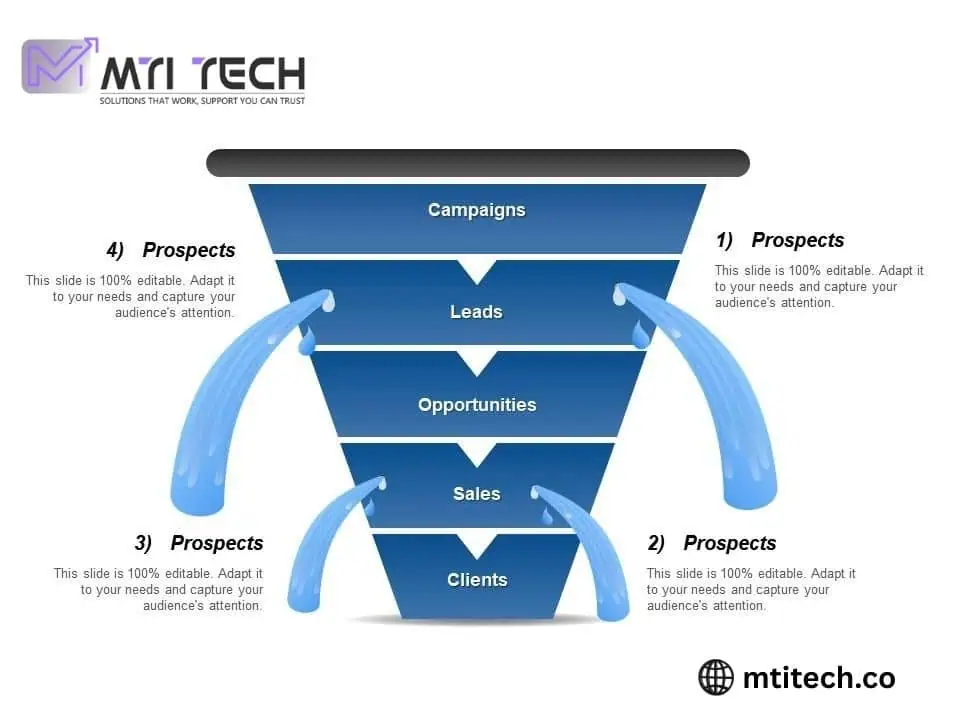
For decades, marketers relied on a simple, predictable framework to drive growth: the traditional marketing funnel. The logic was straightforward, move prospects from Awareness to Interest, then guide them toward Action. This linear path shaped advertising strategies, content calendars, and even how Digital Marketing Services were sold to clients.
But new data tells a different story.
User behavior has changed dramatically. Buyers no longer follow a neat, step-by-step journey. Instead, they move unpredictably between research, comparison, validation, hesitation, and decision-making. According to recent industry studies and behavioral research, the traditional funnel is no longer an accurate representation of how modern customers think or buy.
In this article, we’ll break down why the traditional marketing funnel is broken, explore the data behind this shift, and explain how modern businesses can fix it by adopting smarter, more flexible frameworks like the Flywheel and the Messy Middle, especially when delivering scalable Digital Marketing Services.
Understanding the Traditional Marketing Funnel
The traditional funnel has long been the foundation of marketing strategy. It assumes that consumers move through a predictable, linear sequence:
- Awareness: The customer becomes aware of a brand or problem
- Interest: They explore solutions and develop interest
- Action: They convert by making a purchase or inquiry
This framework worked reasonably well in a pre-digital world where information was limited, options were fewer, and brand messaging controlled most touchpoints.
However, the digital landscape has completely disrupted this model.
What the Data Reveals About Modern Buyer Behavior
Recent marketing research shows that buyers no longer move in straight lines. Instead, they engage in looping, fragmented, and nonlinear behaviors.
Key Data-Backed Insights:
- Consumers interact with multiple channels before converting
- Buyers repeatedly switch between comparison and validation stages
- Social proof now influences decisions more than brand messaging
- Trust-building happens before, during, and after conversion
Studies consistently show that people revisit reviews, testimonials, pricing pages, social media profiles, and competitors multiple times before making a decision. This behavior breaks the assumption that once someone reaches “Action,” the journey ends.
For businesses offering Digital Marketing Services, this shift means traditional lead funnels fail to capture the full buyer journey and often misattribute conversions.
Why the Linear Funnel No Longer Works
1. Customers Don’t Move in One Direction
Modern buyers jump backward and forward. A prospect may discover your brand, compare competitors, leave, return weeks later, read reviews, and only then convert.
The funnel doesn’t account for this behavior.
2. Decision-Making Is Emotionally Driven
Data shows that emotional triggers, trust, reassurance, credibility, play a bigger role than rational progression. These factors don’t belong to a single funnel stage.
3. Marketing Touchpoints Never Stop
The funnel assumes marketing ends at conversion. In reality, post-purchase engagement drives retention, referrals, and lifetime value, critical metrics for sustainable Digital Marketing Services.
4. Funnels Ignore Customer Experience
Funnels focus on conversion rates, not customer satisfaction. Poor experiences after conversion can undo months of marketing effort.
The Rise of the Flywheel Model
To address these flaws, modern marketers are shifting toward the Flywheel model.
Instead of focusing on moving customers through a funnel, the Flywheel focuses on building momentum through continuous value delivery.
The Flywheel Has Three Core Stages:
- Attract: Draw users with valuable, relevant content
- Engage: Build trust through meaningful interactions
- Delight: Deliver exceptional experiences that encourage loyalty
Unlike the funnel, the Flywheel doesn’t end at conversion. Customers become advocates, feeding energy back into the system through referrals, reviews, and repeat business.
For agencies offering Digital Marketing Services, this model aligns better with long-term growth and recurring revenue.
Introducing the “Messy Middle” Concept
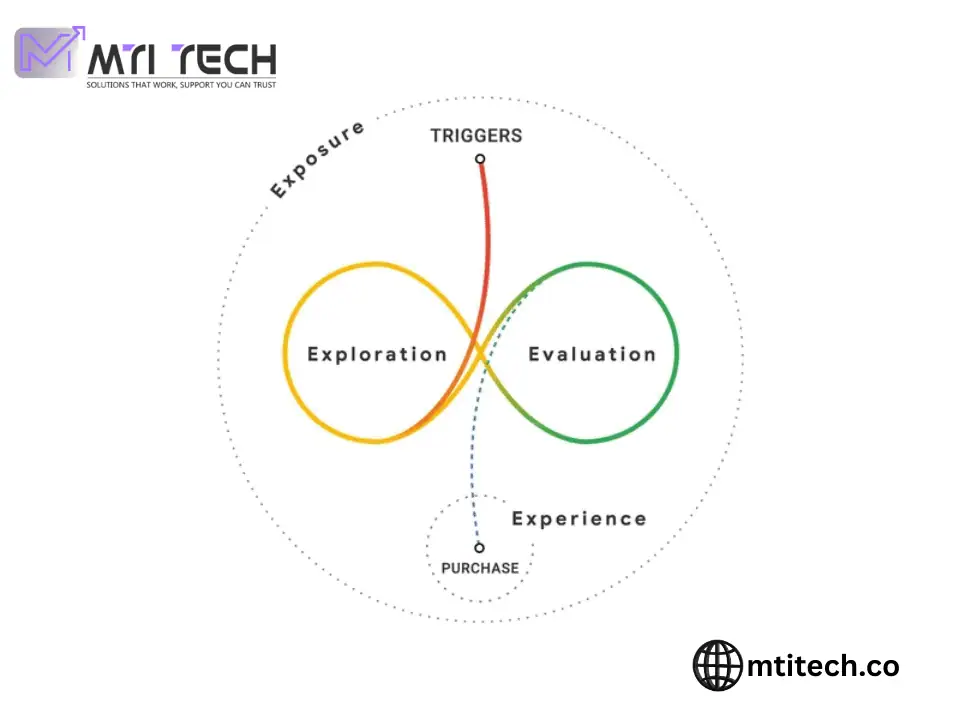
Google’s behavioral research introduced another critical framework: The Messy Middle.
The Messy Middle represents the chaotic space between awareness and decision-making. In this phase, users bounce between two key behaviors:
- Exploration: Learning about options, brands, and solutions
- Evaluation: Narrowing choices using biases like social proof, authority, and scarcity
This phase is not linear. Buyers loop endlessly until they feel confident enough to decide.
Traditional funnels fail here because they assume certainty increases steadily. In reality, uncertainty peaks right before conversion.
How Biases Shape Buying Decisions
Data shows that cognitive biases heavily influence buyer behavior in the Messy Middle:
- Social Proof: Reviews, testimonials, case studies
- Authority Bias: Expert content, certifications, awards
- Scarcity: Limited-time offers or availability
- Familiarity: Repeated brand exposure
Effective Digital Marketing Services must be designed to reinforce these biases across multiple touchpoints, not just at the bottom of the funnel.
Why This Shift Matters for Digital Marketing Services
If your strategy is still built around traditional funnels, you’re likely setting your marketing efforts up for inefficiency and missed revenue opportunities. Linear funnels no longer reflect how real users research, compare, hesitate, and decide.
Businesses relying on outdated funnel models often face these critical issues:
Misreading Customer Intent
Modern users don’t arrive with a single, fixed intent. Intent evolves as people move between research, comparison, validation, and reassurance. Funnel-based strategies often label users too early, leading to irrelevant messaging, mistimed offers, and wasted ad spend. Effective Digital Marketing Services adapt in real time to shifting intent signals across channels.
Overvaluing First-Click or Last-Click Attribution
Traditional attribution models oversimplify the buyer journey by giving credit to only one touchpoint. In reality, conversions are influenced by multiple interactions, blogs, reviews, retargeting ads, emails, and social proof. When attribution is flawed, budgets are misallocated and high-impact touchpoints in the “Messy Middle” go unnoticed.
Losing Prospects During the Decision Phase
The highest drop-off doesn’t happen at awareness, it happens during evaluation. When users lack trust signals, clarity, or reassurance, they stall or abandon the journey altogether. Brands that don’t support this phase with case studies, comparisons, FAQs, and testimonials silently lose high-intent prospects who were close to converting.
Underutilizing Post-Conversion Opportunities
Funnels treat conversion as the finish line. Modern growth models treat it as the starting point. Without post-conversion nurturing, such as onboarding content, email engagement, loyalty programs, and remarketing, businesses leave lifetime value, referrals, and repeat sales untapped. This is where scalable Digital Marketing Services create long-term ROI.
Falling Behind in Competitive Markets
As competitors adopt Flywheel and behavior-driven strategies, funnel-dependent brands struggle to keep up. Marketing becomes reactive instead of adaptive, making it harder to compete in crowded digital environments where trust and experience matter more than exposure.
Modern marketing success depends on understanding how people actually behave, not how we assume they should behave. Brands that align their Digital Marketing Services with real-world decision-making patterns build stronger relationships, higher conversion efficiency, and sustainable growth in an increasingly complex digital landscape.
How to Fix Your Broken Marketing Funnel
1. Design for Nonlinear Journeys
Accept that users won’t follow a straight path. Build content and campaigns that allow re-entry at any stage.
Examples:
- Retargeting ads for returning visitors
- Comparison pages for undecided users
- Educational content for early-stage researchers
2. Optimize for the Messy Middle
Create assets that reduce uncertainty and build trust:
- Detailed service pages
- Transparent pricing or value breakdowns
- Case studies and real-world results
- Third-party reviews and testimonials
These elements are essential for high-performing Digital Marketing Services.
3. Focus on Retention, Not Just Acquisition
Retention is cheaper and more profitable than acquisition. Your strategy should include:
- Email nurturing sequences
- Post-purchase onboarding
- Ongoing value-driven content
Happy customers fuel the Flywheel.
4. Use Data Beyond Vanity Metrics
Move beyond impressions and clicks. Focus on:
- Engagement depth
- Return visits
- Assisted conversions
- Customer lifetime value
These metrics align better with modern buyer behavior.
5. Integrate SEO, Content, and UX
SEO is no longer about ranking one page for one keyword. It’s about creating connected experiences across:
- Blogs
- Service pages
- FAQs
- Internal linking
This holistic approach strengthens Digital Marketing Services performance.
The Role of AI and Automation in Modern Marketing
AI-driven tools now analyze behavior patterns in real time, helping marketers:
- Predict intent shifts
- Personalize content delivery
- Optimize touchpoints dynamically
When combined with Flywheel thinking, AI helps scale engagement without sacrificing relevance.
Case Example: Funnel vs Flywheel in Action
A business using traditional funnels may focus heavily on lead capture forms. In contrast, a Flywheel-driven approach invests in:
- Educational blogs
- Comparison tools
- Long-term email value
- Community building
The result? Higher trust, better conversions, and stronger brand equity.
This is why modern Digital Marketing Services prioritize systems, not just campaigns.
What This Means for the Future of Marketing
The data is clear: linear funnels are outdated.
Marketing is no longer about pushing users toward a single action. It’s about supporting decision-making across an evolving journey. Brands that adapt will build stronger relationships, higher lifetime value, and sustainable growth.
Those that don’t risk becoming invisible in a crowded digital ecosystem.
Final Thoughts: Adapt or Fall Behind
The traditional marketing funnel isn’t just broken, it’s misleading.
Modern buyers don’t move in straight lines. They explore, hesitate, validate, return, and decide on their own terms. By embracing the Flywheel and understanding the Messy Middle, businesses can align marketing strategies with real human behavior.
For brands offering or investing in Digital Marketing Services, this shift isn’t optional, it’s essential.