How to Rank in ChatGPT: The Ultimate Guide to Answer Engine Optimization (AEO) for 2026
Introduction: The Rules of the Game Have Changed
For the last 15 years, the goal of digital marketing was simple: Get the Click.
You fought for the #1 spot on Google so that a user would see your link, click it, wait for your site to load, and then read your pitch. But in 2026, the “Click” is becoming an endangered species.
Today, when a user asks ChatGPT, “What is the best software house in USA for enterprise apps?”, they aren’t looking for a list of links. They are looking for a verdict.
If ChatGPT answers, “I recommend X Company,” that company wins. If your company is buried in the search results but not cited by the AI, you effectively do not exist.
Here is the secret most agencies won’t tell you:
Optimizing for ChatGPT is not the same as optimizing for Google. In fact, ChatGPT (and its search feature, SearchGPT) relies heavily on the Bing search index and specific “Retrieval” protocols that traditional SEO often ignores.
This guide is not a theoretical discussion. This is a tactical manual. We are going to break down the exact technical steps—from Schema markup to “Entity” management—that MtiTech uses to ensure our clients are the ones being recommended by the machines.
Understanding the Machine: How ChatGPT “Finds” You
To rank in an AI, you must first understand how it thinks. An AI model is not a search engine; it is a prediction engine.
When you ask ChatGPT a question about current events or specific businesses, it uses a process called RAG (Retrieval-Augmented Generation).
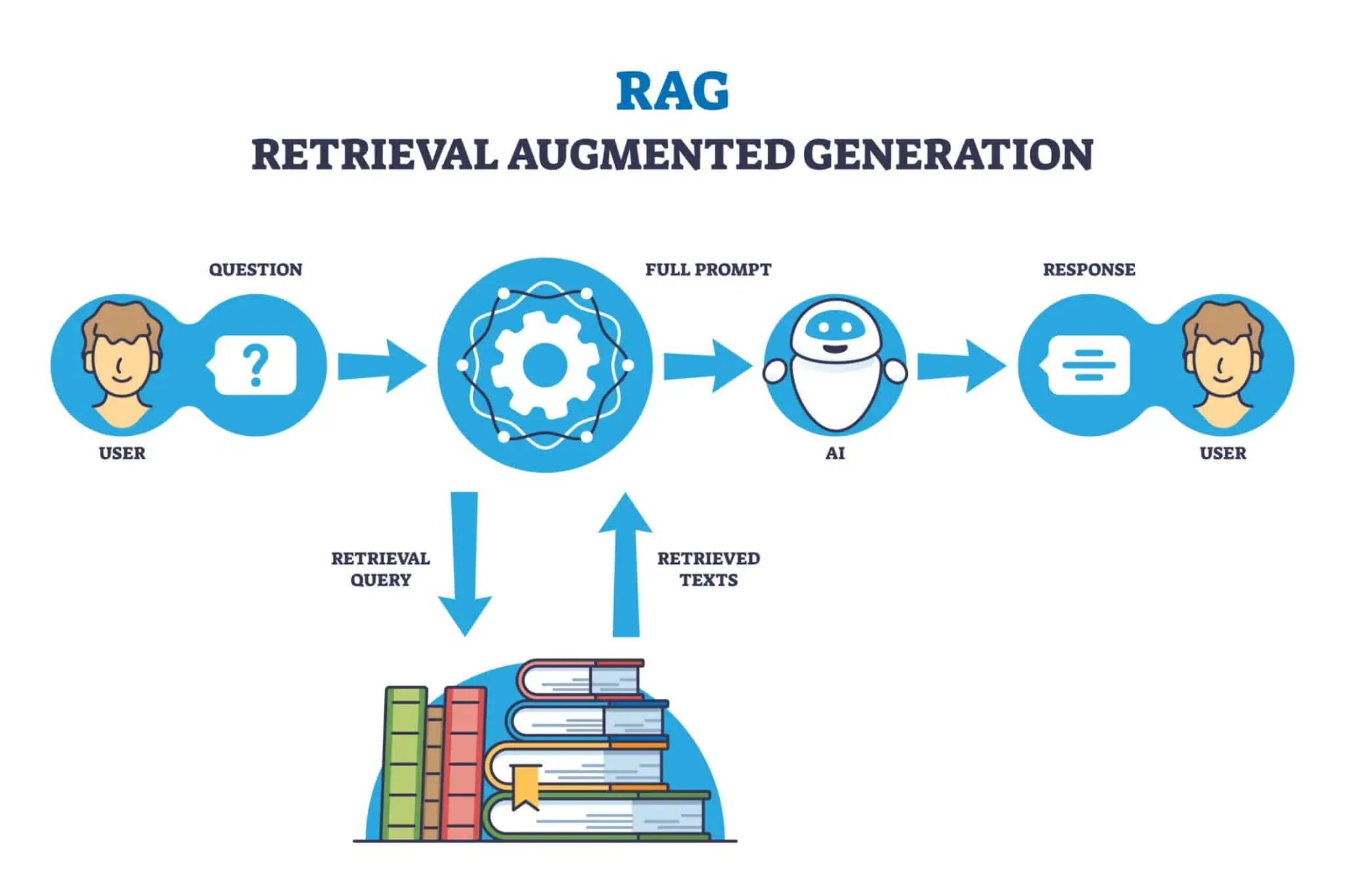
Here is the simplified version of how this works, and why it matters for your website:
1. The “Frozen” Memory (Training Data)
The core model (like GPT-5) has a “frozen” memory. It knows everything that happened up until its training cutoff date. If your business was famous in 2022, the AI “remembers” you. If you are new, or if you have pivoted your services recently, the AI’s memory is blank.
2. The “Live” Look-Up (Grounding)
This is where AEO happens. When the AI realizes its memory is outdated, it connects to the internet to “ground” its answer.
- It sends a crawler (like OAI-SearchBot) to scan the web.
- It doesn’t read entire websites like a human. It looks for chunks of high-confidence data.
- It synthesizes those chunks into an answer.
3. The “Citation” Battle
The AI wants to look smart. It prioritizes sources that are structured in a way that makes the AI’s job easy.
Think of it like an open-book exam.
- Traditional SEO: You are trying to be the loudest student in the class waving your hand (trying to get noticed).
- AEO: You are trying to be the textbook. You want to present your information so clearly and logically that the student (the AI) simply copies your answer because it’s the easiest one to read.
If your website is cluttered, slow, or code-heavy, the AI skips you. It moves to a competitor whose data is cleaner.
Step 1: The Technical Foundation (Code & Structure)
You cannot charm an algorithm with a pretty layout. You have to speak its native language. For AI, that language is Structured Data.
1. Schema Markup (JSON-LD)
This is the single most important factor for AEO. Schema Markup is a snippet of code that tells the search bot explicitly what your content is.
Most websites use basic schema. To rank in ChatGPT, you need Granular Schema.
- Organization Schema: Don’t just list your name. List your “SameAs” links (linking your Facebook, LinkedIn, Crunchbase) so the AI can verify your entity.
- FAQPage Schema: This is AEO gold. If you have an FAQ section, wrap it in this code. It allows the AI to pull your exact answer and serve it to the user.
- Service Schema: Explicitly define what you sell. If you sell “Web Development,” tag it. Don’t let the AI guess.
Pro Tip: Use Google’s “Rich Results Test” tool to verify your schema is error-free.
2. Welcome the Bots (Robots.txt)
Many business owners unknowingly block AI crawlers because they are using outdated security settings. You must update your robots.txt file to explicitly allow legitimate AI scrapers.
- Allow: User-agent: GPTBot (This is OpenAI’s crawler)
- Allow: User-agent: Bingbot (Since ChatGPT uses Bing)
If you block these, you are voluntarily opting out of the future of search.
3. Site Speed & The “Crawl Budget”
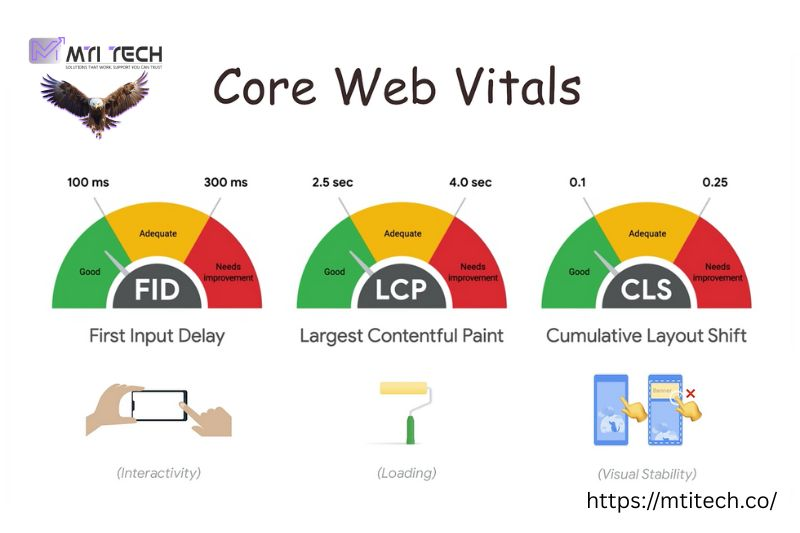
AI bots are busy. They have a limited “budget” of time they will spend on your site. If your page takes 5 seconds to load because of unoptimized images, the bot will leave before it indexes your content. A fast site isn’t just for humans anymore; it’s for machines.
Step 2: Optimizing Content for “Machine Reading”
Once the bot is on your page, how do you make sure it understands your content? You need to write for NLP (Natural Language Processing).
1. The “Inverted Pyramid” Style
Journalists have used this for decades, and now AEO demands it.
- Top: The direct answer (The “Who, What, Where”).
- Middle: The supporting details.
- Bottom: The background info.
Bad for AEO: “When considering the budget for a website, there are many factors…” (The AI gets bored).
Good for AEO: “A custom website typically costs between $3,000 and $10,000.” (The AI grabs this fact).
2. Structure is King (Lists & Tables)
LLMs (Large Language Models) love structure. They are trained to recognize patterns.
- Use Bullet Points for features.
- Use Tables for pricing or comparisons.
- Use H2 and H3 Headers that are questions (e.g., “Why is MtiTech the best agency?”).
If your content is a giant wall of text, the AI might hallucinate or summarize it incorrectly. Break it down.
3. Data Over Adjectives
AI trusts data. It is skeptical of adjectives.
- Don’t write: “We are a world-class agency with great results.” (Subjective)
- Do write: “We have delivered 500+ projects and generated a 200% ROI for clients in 2024.” (Objective)
The AI can cite the second sentence as a fact. It ignores the first sentence as marketing fluff.
Step 3: Establishing “Entity” Trust (Off-Page AEO)
You can have perfect code and perfect content, but if the AI doesn’t trust who you are, it won’t recommend you.
In the AI world, your brand is an “Entity.” The goal of Off-Page AEO is to prove to the Knowledge Graph that your Entity is legitimate, authoritative, and active.
1. The “SameAs” Strategy
AI models verify facts by cross-referencing. They look for your brand across the web. If your business address is different on Facebook than it is on your website, or if your operating hours don’t match your Google Business Profile, the AI lowers your “Confidence Score.”
- The Fix: Audit your digital footprint. Ensure your N.A.P. (Name, Address, Phone) is identical on every platform—from LinkedIn to Yelp to your website footer.
2. Get Cited in the “Training Data”
AI models are trained on high-authority websites. Being mentioned in a local directory is okay, but being mentioned in a major news outlet, a university study, or a leading industry report is gold.
- Digital PR: Focus on getting your brand mentioned in articles that discuss your specific niche. If an article titled “Top Tech Innovators in USA” mentions MtiTech, the AI links your brand to “Innovation” and “Lahore” permanently.
3. Reviews are Content
AI reads reviews. It uses them to gauge sentiment.
- If a user asks, “Who is the most responsive agency?”, the AI scans reviews for the word “responsive.”
- Encourage clients to use specific keywords in their reviews. Instead of just “Great job,” ask them to write, “Great job on the SEO strategy.”
Step 4: The “Bing” Optimization Checklist
This is the step 90% of businesses miss. Because ChatGPT is partnered with Microsoft, it uses Bing for its live web browsing. If you have spent years optimizing only for Google, you are invisible to ChatGPT.
The Bing Survival Kit:
- Bing Places for Business: It is the equivalent of Google Business Profile. Claim it. Verify it. Fill it out completely.
- Bing Webmaster Tools: Submit your XML sitemap directly to Bing. This forces Bing to index your pages immediately, rather than waiting for it to find you.
- Visual Search: Bing is heavy on visual search. Ensure your images have descriptive Alt Text (e.g., “Dashboard UI Design by MtiTech” rather than “IMG_001.jpg”).
Measuring Success: The New Metrics
How do you know if AEO is working? You can’t just look at “Traffic” anymore.
- Share of Voice: Are you showing up in the AI answers? (You have to test this manually by asking chatbots questions about your industry).
- Zero-Click Conversions: Is your phone ringing more? Are you getting more direct emails? In AEO, users often get the info they need (like your phone number) without ever visiting your website.
- Brand Mentions: Use tools to track how often your brand name appears on the web. An increase in mentions usually correlates with an increase in AI visibility.
Conclusion & Checklist
The shift from Search Engines to Answer Engines is not a trend; it is an evolution. The businesses that adapt their code, content, and reputation strategy today will be the market leaders of 2026.
This might seem like a lot of technical work. It is.
AEO requires a mix of advanced coding (Schema), strategic writing (NLP), and reputation management (Entity Trust). But you don’t have to navigate this shift alone.
MtiTech is at the forefront of this revolution. We don’t just build websites for humans; we build digital ecosystems that machines understand and recommend.
Ready to future-proof your business?
Don’t let the AI leave you behind. Contact us today for a comprehensive AEO Audit, and let’s make sure your brand is the answer everyone is looking for.