You Don’t Have a Strategy Problem.
You Have a “Clipboard” Problem.
What happens behind the glossy plans
But inside the operation, something very different is happening.
Purchase orders are still being tracked manually. Logistics updates are sitting in email threads. Managers are copying numbers from one spreadsheet to another. Vendor confirmations are being chased through calls and messages. Invoice details are being checked by hand. Delivery statuses are updated late because someone forgot to refresh a sheet. A team member prints a document, signs it, scans it, and emails it back.
That is the clipboard problem.
It is not always a physical clipboard anymore. Sometimes it is a spreadsheet. Sometimes it is a shared folder. Sometimes it is a WhatsApp message. Sometimes it is an outdated ERP process that nobody likes but everyone still uses. The format may change, but the issue is the same: slow, manual, repetitive back-office work is holding the business back.
Many companies believe they have a strategy problem when they actually have an operations execution problem. The strategy may be correct, but the process underneath it is too outdated to support it.
For businesses dealing with BPO Operations, PO Processing, logistics coordination, vendor communication, and back-office administration, the clipboard problem can quietly destroy speed, accuracy, customer satisfaction, and profitability.
What Is the Clipboard Problem?
The clipboard problem is the gap between how a company wants to operate and how work actually gets done every day.
It appears when teams rely on manual tracking, repeated data entry, outdated approvals, disconnected systems, email-based coordination, and people-dependent follow-ups to manage important business processes.
A company may have modern goals, but if daily operations are still being managed through slow manual methods, growth becomes harder.
The clipboard problem usually shows up in areas like:
Purchase order creation, PO verification, Vendor follow-ups, Logistics tracking, Shipment updates, Invoice matching, Manual reporting, Order status updates, Data entry, Approval chasing, Inventory coordination, Back-office documentation.
These tasks may seem small individually. But when they happen hundreds or thousands of times every month, they become a serious operational burden.
A slow PO process can delay procurement. A missed logistics update can affect delivery. A wrong invoice detail can create payment issues. A late vendor confirmation can slow down customer fulfillment. A spreadsheet error can create confusion across multiple departments.
The business may look like it needs a new strategy, but what it really needs is a cleaner operational engine.
Why Strategy Fails When Operations Are Manual
A good strategy depends on execution. Execution depends on the process. Process depends on systems, people, and accountability.
When the back office is slow, the front office eventually suffers.
For example, a company may create a strategy to improve delivery speed. But if logistics updates are manually tracked and delayed, the strategy cannot work properly. A company may want to improve vendor performance. But if purchase orders are created late or vendor communication is scattered, the strategy becomes weak. A company may want better cash flow control. But if invoice matching and PO reconciliation are handled manually, errors and delays continue.
This is why strategy and operations cannot be separated.
A leadership team can create the best plan in the world, but if the daily workflow still depends on manual admin work, the results will remain limited.
Manual processes create friction. Friction creates delay. Delay creates cost. Cost reduces competitiveness.
The clipboard problem does not always look dramatic. It hides behind normal business activity. Everyone is busy. Everyone is responding to emails. Everyone is updating something. Everyone is following up. But the business is not moving as fast as it should.
That is the danger.
A company can be active without being efficient.
The Real Cost of Manual Back-Office Processes
Manual back-office work costs more than most businesses realize.
The obvious cost is labor. If employees spend hours creating POs, checking data, updating spreadsheets, and chasing approvals, the company is paying for time that could be used more productively.
But the hidden costs are often larger.
Manual processes create errors. Errors create rework. Rework creates delays. Delays create frustration. Frustration affects managers, vendors, customers, and internal teams.
In PO Processing, a simple mistake in quantity, pricing, vendor details, tax information, delivery address, or approval status can slow down the entire procurement chain. Someone has to identify the mistake. Someone has to correct it. Someone has to resend the document. Someone has to confirm the update. In many cases, the issue touches procurement, finance, operations, and logistics at the same time.
In logistics, manual tracking can create visibility problems. If shipment updates are not recorded properly, teams may not know whether goods are delayed, delivered, stuck, damaged, or still waiting for dispatch. This affects customer communication and internal planning.
In back-office reporting, manual data entry can distort decision-making. If the data is late, incomplete, or inaccurate, managers make decisions based on weak information.
This is how the clipboard problem becomes a business performance problem.
Busy Teams Are Not Always Productive Teams
One of the most misleading signs in business is busyness.
A department may look productive because everyone is working hard. Phones are ringing. Emails are moving. Spreadsheets are open. Managers are jumping between tasks. Team members are staying late. But if most of that energy is spent on manual coordination, the business is not truly efficient.
Productivity is not about how much activity happens. It is about how much valuable output is created.
A team spending three hours chasing vendor confirmations is busy. A team using a structured BPO support process to track confirmations, update records, and escalate only exceptions is productive.
A manager manually checking every PO is busy. A manager reviewing clean exception reports and approving only important cases is productive.
A logistics coordinator searching through email threads for shipment updates is busy. A logistics support team maintaining live status records and daily summaries is productive.
The difference is process design.
The clipboard problem keeps people busy with low-value work. A better operating model moves repetitive work into a structured support system so skilled employees can focus on judgment, improvement, and decision-making.
Why PO Processing Is a Common Bottleneck
Purchase order processing is one of the most common places where manual back-office problems appear.
A purchase order seems simple, but the process behind it can involve multiple steps. A team may need to confirm the request, verify vendor details, check item quantities, confirm pricing, route approvals, issue the PO, send it to the vendor, track confirmation, match it with delivery documents, and later support invoice reconciliation.
If this process is handled manually, delays can happen at every stage.
The request may sit in someone’s inbox. The approval may be missed. The vendor may not confirm receipt. The PO number may be entered incorrectly. Finance may not receive the right document. Logistics may not know the order status. The manager may only find out when something is already late.
This is why PO Processing should not depend only on scattered manual effort.
A structured BPO Operations team can help manage the process with consistency. They can create, verify, update, track, and organize PO-related information so managers only step in when approval, exception handling, or strategic judgment is required.
This improves speed and reduces confusion.
Logistics Coordination Needs Visibility, Not Guesswork
Logistics depends on visibility.
Businesses need to know what has been ordered, what has been dispatched, what is delayed, what has arrived, what is pending, and what needs action. Without clear visibility, logistics teams become reactive.
Manual logistics tracking often creates guesswork. A manager asks for an update. Someone checks an email. Someone calls a vendor. Someone opens a spreadsheet. Someone sends a message to the warehouse. After several follow-ups, the team finally understands the status.
That is not a scalable process.
A better logistics support model keeps updates organized from the beginning. Shipment status, vendor responses, delivery documents, pending issues, and exception alerts should be recorded in a structured way.
BPO logistics support can help businesses maintain cleaner records and faster communication. The support team can follow up on routine updates, track delivery status, organize documentation, and prepare summaries for managers.
This allows the internal team to focus on solving problems instead of searching for information.
The Spreadsheet Trap
Spreadsheets are useful, but they can also become dangerous when they become the main operating system of a growing business.
At an early stage, spreadsheets may be enough. They are flexible, simple, and familiar. But as order volume increases, vendor relationships expand, and logistics complexity grows, spreadsheets begin to show their limits.
Common spreadsheet problems include: Duplicate entries, Outdated data, Wrong formulas, Version confusion, Manual copy-paste errors, Limited accountability, Lack of real-time visibility, Poor audit trail, No clear escalation workflow.
The problem is not the spreadsheet itself. The problem is using a spreadsheet as a substitute for process ownership.
Many companies say they are “tracking everything,” but when you look closer, tracking depends on one person updating a file manually. If that person is absent, overloaded, or careless, the system becomes unreliable.
That is the clipboard problem in digital form.
Why Manual Processes Hurt Customer Experience
Customers may never see your back office, but they feel its impact.
When PO Processing is slow, orders can be delayed. When logistics updates are inaccurate, customers receive poor communication. When invoice details are wrong, billing disputes happen. When vendor coordination is weak, delivery timelines become uncertain.
From the customer’s point of view, the reason does not matter. They only see the result.
They do not care if the delay happened because an approval email was missed. They do not care if a spreadsheet was not updated. They do not care if a vendor confirmation was buried in someone’s inbox.
They care about whether the business delivered on time, communicated clearly, and handled the process professionally.
This is why back-office efficiency is directly connected to customer trust.
A strong BPO Operations structure helps reduce the internal friction that causes external disappointment.
The Managerial Cost of Clipboard Operations
Manual back-office processes do not only slow the business. They also drain managers.
Managers should be focused on decision-making, performance improvement, team leadership, vendor strategy, customer satisfaction, and operational planning. Instead, many managers spend large parts of their day checking small details, chasing updates, correcting errors, and following up on routine admin work.
This is expensive.
A manager’s time is too valuable to be used as a manual tracking tool. When managers are pulled into low-level admin work, the company loses strategic capacity.
This also contributes to burnout. Talented managers may become frustrated because they are constantly busy but not doing the work they were hired to do. Over time, this affects motivation, retention, and leadership quality.
Removing administrative grunt work is not only an efficiency improvement. It is a talent protection strategy.
BPO Operations as the Modern Back-Office Engine
BPO Operations can help solve the clipboard problem by creating a reliable support layer for repetitive, process-driven tasks.
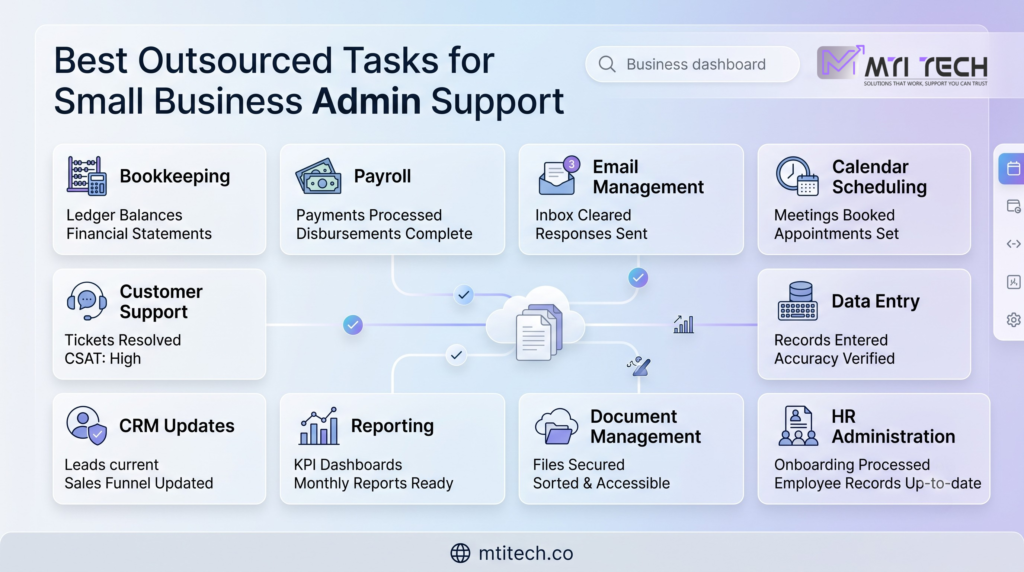
Instead of letting routine admin work sit with managers or internal teams, companies can outsource structured operational tasks to a trained BPO team. This may include PO Processing, order entry, logistics coordination, vendor follow-ups, document management, invoice support, reporting, and administrative tracking.
The goal is not simply to reduce headcount. The goal is to improve process consistency.
A good BPO Operations model creates: Clear workflows, Defined responsibilities, Faster follow-ups, Cleaner data, Better reporting, Reduced manual burden, Improved accountability, Exception-based escalation, More time for internal teams.
This allows the business to move from person-dependent operations to process-driven operations.
That shift is powerful.
Exception-Based Management: A Smarter Way to Work
One of the biggest improvements BPO support can bring is exception-based management.
In a manual environment, managers may review everything because the process does not separate normal work from problem cases. This creates unnecessary workload.
In an exception-based model, routine tasks are handled by the support team. Managers are only alerted when something requires attention.
For example, if a PO is created correctly, confirmed by the vendor, and moving on schedule, the manager does not need to intervene. But if the vendor does not respond, pricing does not match, delivery is delayed, or approval is missing, the issue is escalated.
This saves time and improves focus.
Managers no longer need to chase every update. They can concentrate on the exceptions that matter.
This is how operational maturity works.
The Role of MTI Tech LLC in BPO Operations
At MTI Tech LLC, our BPO Operations support is designed for businesses that want to remove slow, manual, outdated back-office processes from their daily workflow.
We understand that many companies do not fail because their strategy is weak. They struggle because their operational foundation is too manual to support growth.
Our BPO support can help businesses manage PO Processing, logistics coordination, vendor communication, back-office documentation, data entry, reporting, and administrative workflows with greater consistency.
For companies dealing with high order volume, frequent vendor communication, shipment tracking, and invoice-related coordination, MTI Tech LLC can provide the operational support needed to reduce internal friction.
The goal is simple: help your team move faster, reduce errors, improve visibility, and free managers from repetitive admin work.
Signs Your Business Has a Clipboard Problem
Your business may have a clipboard problem if:
Your managers spend too much time chasing updates.
Your PO Processing depends on manual spreadsheets.
Your logistics status is not visible in real time.
Your team often asks, “Who has the latest file?”
Your vendor communication is scattered across emails and messages.
Your reports are delayed because data must be collected manually.
Your customers ask for updates before your team has them.
Your employees spend more time updating systems than solving problems.
Your approvals get stuck because there is no clear workflow.
Your operations depend heavily on one or two people who “know the process.”
These are not small issues. They are signs that the business has outgrown its current operating model.
Why Outdated Back-Office Processes Block Growth
Growth creates volume. Volume exposes weak processes.
A manual process that works for 20 orders per week may fail at 200 orders per week. A spreadsheet that works for five vendors may become messy with fifty vendors. A manager who can manually track ten shipments cannot reliably track hundreds without support.
This is why businesses often feel stuck after a certain stage.
They may have demand. They may have good service. They may have capable people. But the back office cannot keep up.
When this happens, leadership may think they need a new strategy. But in many cases, they need operational redesign.
They need cleaner workflows, better task ownership, stronger reporting, and reliable back-office support.
BPO Operations can help create that capacity without forcing the business to build a large internal admin department immediately.
From Manual Work to Managed Workflow
The solution to the clipboard problem is not just automation. It is a managed workflow.
Automation is valuable, but it must be supported by good process design and trained people. If a company automates a messy process without improving it, the mess simply moves faster.
A strong BPO Operations approach starts by understanding the workflow. What tasks are repetitive? What information is needed? Who approves what? Where do delays happen? What should be escalated? What can be standardized? What should be reported daily or weekly?
Once the workflow is clear, the business can decide what should be outsourced, automated, simplified, or kept in-house.
This creates a stronger operating system.
The business moves from random follow-ups to structured task management. It moves from manual updates to organized reporting. It moves from reactive firefighting to proactive visibility.
How Better Back-Office Support Improves Profitability
Back-office improvement affects profitability in several ways.
First, it reduces wasted time. When routine tasks are handled efficiently, internal teams can focus on higher-value work.
Second, it reduces errors. Cleaner PO Processing, better data entry, and structured logistics tracking reduce costly mistakes.
Third, it improves vendor coordination. Faster communication and better documentation can reduce delays and disputes.
Fourth, it improves customer experience. When internal operations are organized, customer updates become faster and more accurate.
Fifth, it improves management productivity. Managers spend less time chasing details and more time improving performance.
Profitability is not only created by sales. It is also protected by operational efficiency.
A company that sells well but operates poorly will eventually lose margin through delays, mistakes, rework, and frustrated customers.
Building a Scalable BPO Operations Model
A scalable BPO Operations model should be built around clarity.
The company should define which tasks need support, how they should be performed, what tools should be used, how quality will be checked, and when issues should be escalated.
For PO Processing, this may include clear steps for creating purchase orders, verifying information, sending vendor confirmations, updating status, and supporting invoice matching.
For logistics, it may include daily shipment tracking, carrier follow-ups, delivery confirmation, document collection, exception reporting, and status summaries.
For back-office reporting, it may include data collection, report formatting, dashboard updates, and weekly performance summaries.
The key is consistency.
When routine work is handled consistently, the business becomes easier to manage.
The Future Belongs to Process-Driven Companies
Modern businesses cannot afford to run on outdated admin habits.
Markets move faster. Customers expect better communication. Vendors expect cleaner coordination. Managers need accurate data. Leadership needs visibility. Finance needs documentation. Operations need speed.
A company still depending on manual back-office processes will struggle to compete with companies that have cleaner systems and stronger support structures.
The future belongs to process-driven companies.
These companies do not depend on memory, guesswork, or scattered spreadsheets. They build workflows. They measure performance. They use BPO support where it makes sense. They reduce manual burden. They protect managerial time. They treat back-office operations as a serious growth function.
This is how businesses move from survival mode to scalable execution.
Conclusion: Fix the Clipboard Before You Rewrite the Strategy
If your company is struggling with delays, errors, slow updates, overwhelmed managers, and poor operational visibility, the problem may not be your strategy.
You may have a clipboard problem.
Your business may still be relying on manual processes that were acceptable at an earlier stage but are now holding you back. PO Processing, logistics coordination, vendor communication, reporting, and back-office administration cannot remain slow and outdated if the company wants to grow.
The solution is to build a better operational support system.