Beyond the Browser: Connecting Your Website to Your CRM
Most businesses think their website’s job ends when someone submits a form. It doesn’t. In fact, that’s where the real opportunity begins.
Most businesses think their website’s job ends when someone submits a form.
It doesn’t.
In fact, that’s where the real opportunity begins.
Every time someone fills out a contact form, downloads a guide, requests a quote, or books a demo, they are raising their hand. They are showing intent. But if that information sits in an inbox… or worse, waits for someone to manually copy and paste it into a CRM, you’re bleeding time, money, and momentum.
Manual data entry from website forms to CRM systems is one of the most common, and most expensive, inefficiencies in modern businesses.
And the solution? Seamless integration.
This is where a professional Website Development Agency becomes more than just a design partner. It becomes a growth partner.
Let’s dive in.
The Hidden Cost of Manual Data Entry
At first glance, manually transferring form submissions into your CRM doesn’t seem like a big deal.
“Someone checks the email and adds it to the system.”
Simple, right?
Wrong.
Here’s what actually happens:
Leads sit in inboxes for hours (or days).
Sales teams respond late.
Data gets entered incorrectly.
Some leads never get entered at all.
Marketing attribution becomes inaccurate.
Reporting becomes unreliable.
Speed matters.
If someone fills out your form at 10:00 AM and your team responds at 4:00 PM, there’s a good chance that prospect has already contacted your competitor.
Manual processes slow you down, and in today’s digital landscape, speed wins deals.
Your Website Is Not a Brochure. It’s a Data Engine.
Too many businesses treat their website like a digital brochure.
But in reality, your website is:
A lead generation machine
A qualification tool
A customer intelligence hub
A 24/7 sales assistant
Every click tells a story.
When your website is properly connected to your CRM:
Form data is instantly captured.
Leads are automatically categorized.
Sales reps are assigned in real-time.
Follow-up emails are triggered immediately.
Tasks are created automatically.
That’s not just convenient.
That’s operational efficiency.
What Happens When Your Website Isn’t Connected to Your CRM?
Let’s paint the real-world picture.
1. Delayed Follow-Ups
Without integration:
Someone checks email.
They forward the lead.
The sales team manually creates a contact.
They remember to follow up.
With integration:
The lead enters CRM instantly.
A rep is assigned automatically.
A follow-up email is triggered in seconds.
Speed builds trust.
2. Human Errors
Manual entry causes:
Misspelled names
Wrong phone numbers
Incorrect email addresses
Lost notes
Automation eliminates these risks.
3. Poor Lead Tracking
If your marketing team runs ads, email campaigns, SEO campaigns, but leads aren’t tracked correctly in your CRM, you don’t know what’s working.
You can’t scale what you can’t measure.
The Real ROI of Website–CRM Integration
When done properly, connecting your website to your CRM delivers:
Faster Response Times: Automatic notifications mean instant action.
Better Lead Qualification: Custom forms can tag leads by: Budget, Service interest, Location, Company size.
Automated Nurture Sequences: Someone downloads a guide? They enter a 7-day email nurture automatically.
Sales Pipeline Visibility: You know: Where leads come from, Who is closing them, How long it takes, What campaigns generate revenue.
That’s powerful.
How a Website Development Agency Approaches CRM Integration
This is not just about installing a plugin.
A professional Website Development Agency looks at the full customer journey.
Here’s how it should be done:
Step 1: Understand the Sales Process
Before writing a single line of code, we ask: How does a lead become a customer? Who handles new inquiries? What qualifies a “good” lead? What CRM are you using? What data matters most? Integration without strategy is chaos.
Step 2: Design Smart Forms
Instead of generic “Name, Email, Message” forms, we build: Multi-step forms, Conditional logic forms, Qualification-based forms, Service-specific forms. This means your CRM doesn’t just receive data. It receives structured, actionable data.
Step 3: API-Based Integration (Not Just Email Forwarding)
There are multiple ways to connect a website to a CRM: Native CRM integrations, API connections, Webhooks, Middleware platforms. A real Website Development Agency ensures: Secure data transfer, Real-time syncing, Error handling systems, Field mapping accuracy, Duplicate management. This is backend architecture, not surface-level design.
Step 4: Automation & Workflow Setup
Integration alone is not enough. You need automation.
For example:
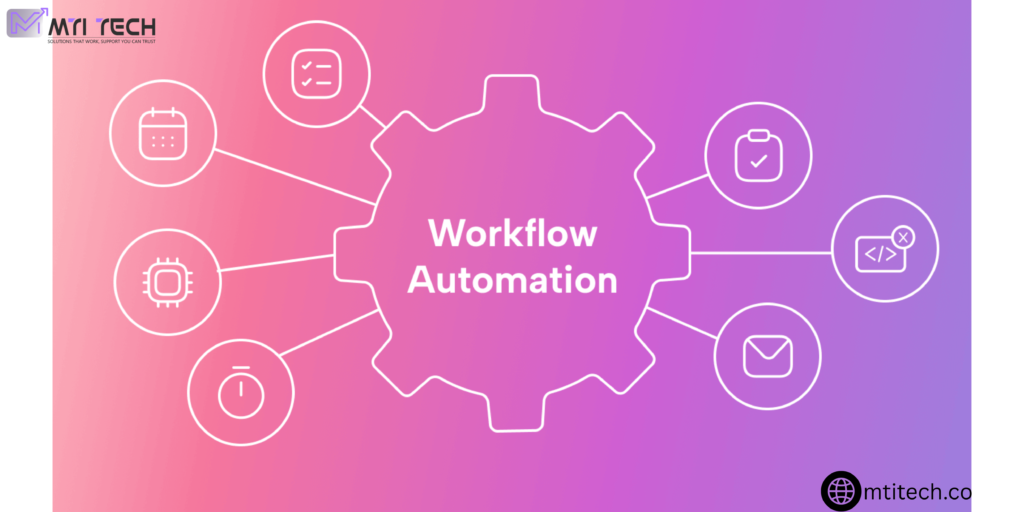
New lead → Assign to sales rep → Send welcome email → Create follow-up task
Demo request → Add to “High Intent” pipeline → Notify manager
E-commerce purchase → Add to customer list → Trigger onboarding emails
That’s how you eliminate manual bottlenecks.
The Competitive Advantage of Automation
Businesses that automate win in three key areas:
1. Speed – The first response often wins the deal.
2. Consistency – Every lead gets the same structured process.
3. Scalability – You can handle 10 leads per day or 1,000, without hiring extra admin staff.
Manual systems break under growth. Integrated systems scale.
Common Mistakes Businesses Make
Mistake 1: Relying on Email Notifications Only – An email notification is not a system. It’s a reminder.
Mistake 2: Using Generic Form Builders – Many form tools don’t properly sync with CRM custom fields.
Mistake 3: No Duplicate Control – Leads get created multiple times. Sales teams get confused.
Mistake 4: No Error Monitoring – If integration fails, nobody knows.
A professional Website Development Agency builds fail-safes and monitoring alerts.
Real-Life Scenario: Before & After Integration
Before:
50 monthly form submissions
15 entered late
5 never entered
10 entered with mistakes
Average response time: 6 hours
After integration:
100% captured instantly
Auto-assigned
5-minute average response time
30% higher conversion rate
That’s the power of systems.
Integration Isn’t Just for Big Companies
Many small and mid-sized businesses think: “CRM integration is for enterprise companies.” Not true. Even startups benefit because: Time is limited, Teams are small, Every lead matters, Cash flow is critical. Automation is not a luxury. It’s leverage.
Security & Data Protection
When handling customer data, security matters. A proper Website Development Agency ensures: Encrypted data transfer (HTTPS), Secure API authentication, Data validation, Spam filtering, GDPR-aware practices (if applicable). Poor integration can expose sensitive data. Professional integration protects your business.
The Marketing Advantage
When your website and CRM talk to each other, marketing becomes smarter. You can: Track which blog post generated a lead, See which campaign converts best, Identify high-value traffic sources, Retarget abandoned inquiries, Segment audiences precisely. Data-driven marketing beats guesswork every time.
Beyond Forms: Advanced Website–CRM Connections
Integration isn’t limited to contact forms. You can connect: Live chat tools, Booking systems, Webinar registrations, E-commerce checkouts, Lead magnets, Surveys, Event sign-ups. Everything flows into one central system. That’s operational clarity.
Is Your Website Helping or Slowing Your Team?
Ask yourself: Are leads manually entered? Do follow-ups depend on reminders? Are you missing data? Is reporting inaccurate? Do sales reps complain about incomplete information? If yes, your website is working… but not efficiently. Efficiency is where profit hides.
The Role of a Modern Website Development Agency
A modern Website Development Agency does not just design pages. It: Engineers conversion systems, Builds automated workflows, Connects platforms, Eliminates inefficiencies, Improves revenue operations. Your website should not stop at the browser. It should connect to the heart of your business, your CRM.
The Future Is Integrated
In the coming years, disconnected systems will disappear. Businesses will rely on: Real-time automation, AI-driven follow-ups, Behavioral segmentation, Predictive sales scoring. But none of that works without integration. The foundation is connection.
Final Thoughts: Stop Copying & Pasting Your Growth
Manual data entry feels harmless. But it costs you: Time, Accuracy, Speed, Conversions, Revenue. Connecting your website to your CRM transforms your business from reactive to proactive. It turns your website into a revenue engine. It allows your sales team to focus on closing, not typing. And it positions your business for scale. If your current system involves copying and pasting form data into your CRM… It’s time to move beyond the browser.
Stop Copying & Pasting Leads
Your website should feed your CRM instantly — no delays, no errors, no lost data. Let our Website Development Agency build a seamless integration that turns your site into a revenue engine.
Move beyond the browser. Connect your CRM today.
From manual to automated — in one conversation.